
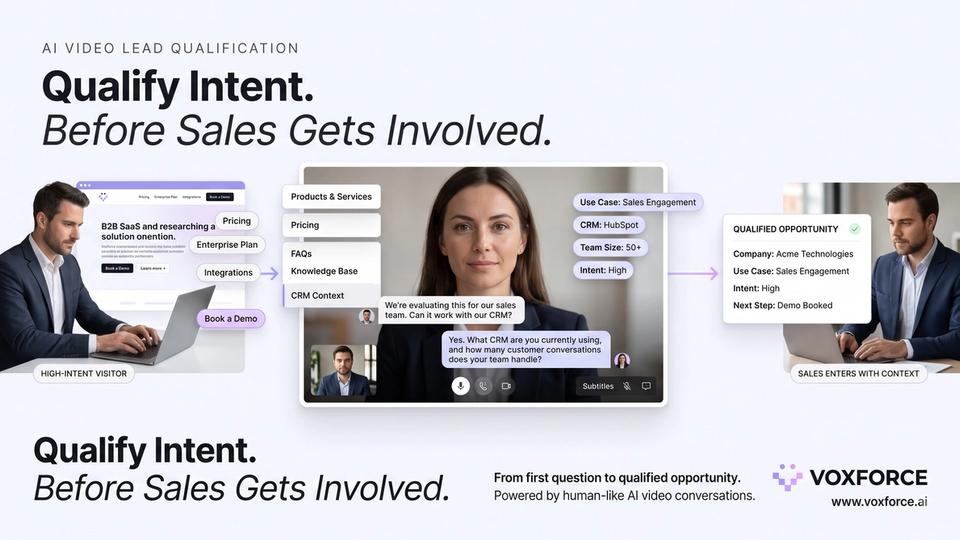
Sales organisations have spent the better part of a decade optimising lead generation. Budgets have grown and marketing technology stacks have multiplied. Very few organisations have optimised the period between the moment a buyer forms genuine intent and the moment a sales conversation actually begins. That gap, largely invisible on a pipeline dashboard, is where a significant share of enterprise revenue quietly disappears.
Sales Pipelines Are Growing. Sales Conversations Are Not.
Marketing functions now generate more qualified demand than at any point in the past decade. Buyers arrive having consumed analyst reports, product comparison sites, customer communities, review platforms, and increasingly, AI search tools that synthesise supplier information on their behalf. Gartner's most recent buyer research puts a hard number on this shift: B2B buyers now spend only 27 percent of their total purchase time researching independently online, and when comparing multiple suppliers, they spend just 5 to 6 percent of their time with any single sales representative.
Sales conversations, meanwhile, still tend to begin the same way they did when buyers had no alternative source of information: with a representative asking about company size, budget, and timeline. The buyer has usually answered these questions for themselves weeks earlier. Gartner's 2026 buyer survey found that the average B2B purchaser now weighs roughly seven distinct information sources, analyst content, peer reviews, AI search summaries, and vendor comparison sites among them, before a sales conversation ever takes place. The friction a generic qualification opener creates is not a minor inefficiency. It is a structural mismatch between how buyers now behave and how sales organisations still open the relationship.
Lead Qualification Is Still Built Around Yesterday's Buying Behaviour
Forms, SDR outreach cadences, and qualification calls were designed for a market in which buyers depended on sellers for information they could not access anywhere else. That dependency has largely disappeared. Gartner reports that 67 percent of B2B buyers now say they prefer a rep-free experience, up from 61 percent just a year earlier, while 45 percent used an AI tool during their most recent purchase.
This does not mean sellers have become irrelevant. The same research found that 69 percent of buyers still turn to a sales representative to validate the insights their independent research produced. What has changed is the purpose of the conversation. Buyers no longer need a representative to explain what a product does. They need one to confirm that their own conclusion is correct. Sales conversations, in other words, should be built around decisions rather than disclosures, and most qualification processes have not yet caught up.
Buyers Do Not Want Qualification. They Want Guidance.
This is the insight most revenue organisations have not fully absorbed. Nobody wakes up wanting to disclose their company size, industry, or budget to a stranger. What a buyer actually wants is closer to: help me understand whether this solution genuinely fits my business.
Consider a mid-market manufacturer evaluating a predictive maintenance platform. The buyer does not want to be qualified against plant size and existing ERP vendor. They want a conversation that helps them reason through downtime cost and expected payback for their specific operation. A regional bank evaluating a fraud detection system wants to understand how the platform performs against transaction patterns similar to its own, not confirm its asset size. A healthcare network evaluating a patient engagement tool wants clarity on how the solution behaves within its compliance environment, not a form asking how many beds it operates.
Gartner's research introduces a useful concept here: value clarity, or the degree to which a buyer understands exactly how a solution will improve outcomes within their specific role and business context. Buyers who reach that level of clarity are twice as likely to report a high-quality purchase. Conventional qualification does not build value clarity. Conversation does.
AI Video Agents Transform Qualification into Discovery
AI Video Agents change what happens in the earliest stage of buyer engagement, not by automating a form, but by replacing it with a genuine conversation. Rather than routing every visitor toward a static contact page, an AI Video Agent can ask relevant follow-up questions, understand the business context behind an enquiry, explain how a product applies to that specific situation, respond to objections in real time, and identify buying signals as they emerge naturally in conversation.
The distinction matters. A chatbot answers questions. An AI Video Agent conducts discovery, behaving less like a digital form and more like an experienced sales engineer having a first conversation, one available at 11pm on a Sunday when a buyer in a different time zone is doing their research. Qualification stops being an interrogation and becomes the buyer's first genuinely useful interaction with the business.
Revenue Teams Should Stop Qualifying Leads and Start Qualifying Intent
Traditional qualification frameworks were built around demographic proxies: company size, revenue band, industry, employee count. These variables were never a direct measure of buying readiness. They were simply the easiest information for a human seller to collect quickly.
A more accurate framework qualifies intent directly. It asks what business challenge the buyer is trying to solve, how ready they are to act on it, how complex the internal decision is likely to be, how urgent the timeline actually is, how many stakeholders will need to align, what risk the organisation is trying to avoid, and what outcome would define success. Demographic data describes who a company is. Intent data describes whether they are close to a decision.
The gap between the two approaches shows up directly in results. A Forrester-reviewed deployment of Salesforce's Einstein lead scoring at a mid-market SaaS company, layered with intent signals rather than firmographic filters alone, produced a 35 percent uplift in conversion rates once the model was tuned to the company's actual buyer behaviour rather than generic industry proxies. The lesson generalises well beyond that one platform: qualification frameworks built on intent variables consistently outperform ones built on demographic shortcuts, because they measure the thing that actually predicts a closed deal.
Gartner's research on why deals stall reinforces this distinction from a different angle. The firm has found that roughly 80 percent of B2B deals fail not because of an external sales process failure, but because internal consensus was never reached. A framework built around demographic qualification cannot detect that risk. A framework built around intent, stakeholder complexity, and decision readiness can surface it early enough to act on.
The Sales Funnel Is Becoming a Conversation Funnel
The traditional model moves buyers through a fixed sequence: marketing generates a lead, an SDR qualifies it, a sales representative runs a demo, and a proposal follows. This sequence assumes the buyer arrives with no context and needs to be walked through each stage in order.
A conversation-led model restructures this sequence around what buyers actually do. Marketing still creates awareness, but the next step is an AI-led conversation that combines education, intent discovery, and qualification into a single continuous interaction, before a sales representative is ever engaged. By the time a human seller enters the process, they are stepping into a relationship that already has context, not starting one from zero.
A B2B software company evaluating this shift on a self-serve trial product offers a useful illustration. Trial users routed to a static help centre converted to paid plans at one rate. Users who had the same questions answered through a live, conversational interface that also surfaced relevant upgrade paths converted at a materially higher rate, because the interaction resolved uncertainty in the same moment it pointed toward a decision. Conversation intelligence platforms have already demonstrated the same principle at the deal level, with organisations using AI to analyse and guide sales conversations reporting win rates roughly 27 percent higher than those that do not, and McKinsey's research on AI-enabled sales tools points to returns in the region of five times the initial investment within six months. Applied earlier in the journey, before a seller is even involved, the same principle compounds.
How VoxForce.ai Is Building the New Revenue Front Door
VoxForce.ai is not building another AI avatar layered on top of a website. VoxForce transforms enterprise knowledge, product detail, pricing logic, objection handling, CRM history, and use case expertise, into Human AI Conversations that engage buyers the moment intent appears, long before a sales representative is involved.
By combining AI Video Agents, conversational and multimodal AI, real-time voice and video, and direct CRM integration, VoxForce allows enterprises across SaaS, manufacturing, financial services, and healthcare to meet buyers with a consultative, context-aware conversation rather than a form. The platform functions as the intelligence layer connecting buyer intent to enterprise expertise, so that sales readiness is established before the first human conversation begins, and sellers spend their time on judgement rather than discovery.
Conclusion
The next generation of high-performing revenue organisations will not win by hiring more SDRs or responding to enquiries a few minutes faster. They will win because every buyer arrives at their first human sales conversation already informed, already qualified, and already confident in what they are evaluating.
AI Video Agents will not replace enterprise sales teams. They will ensure sellers spend their time on the work that actually creates value: solving business problems, building trust, and closing opportunities, instead of collecting information buyers were always willing to share earlier. For revenue leaders, the competitive advantage no longer comes from generating more pipeline. It comes from understanding buyer intent before the first sales meeting ever takes place.